Mold Removal & Remediation in the San Jacinto Valley
Removal follows a sequence, and the order is what protects the rest of your home. We contain the work area first with sheeting and set an air machine so air leaves the containment through a filter and exhausts outside, instead of pushing spores down your hallway. Then material comes out. Drywall, wet insulation, carpet pad and delaminated subfloor cannot be cleaned and are cut back past the edge of the damage. Framing and other solid wood is cleaned, HEPA-vacuumed and treated rather than demolished wherever it is structurally sound.
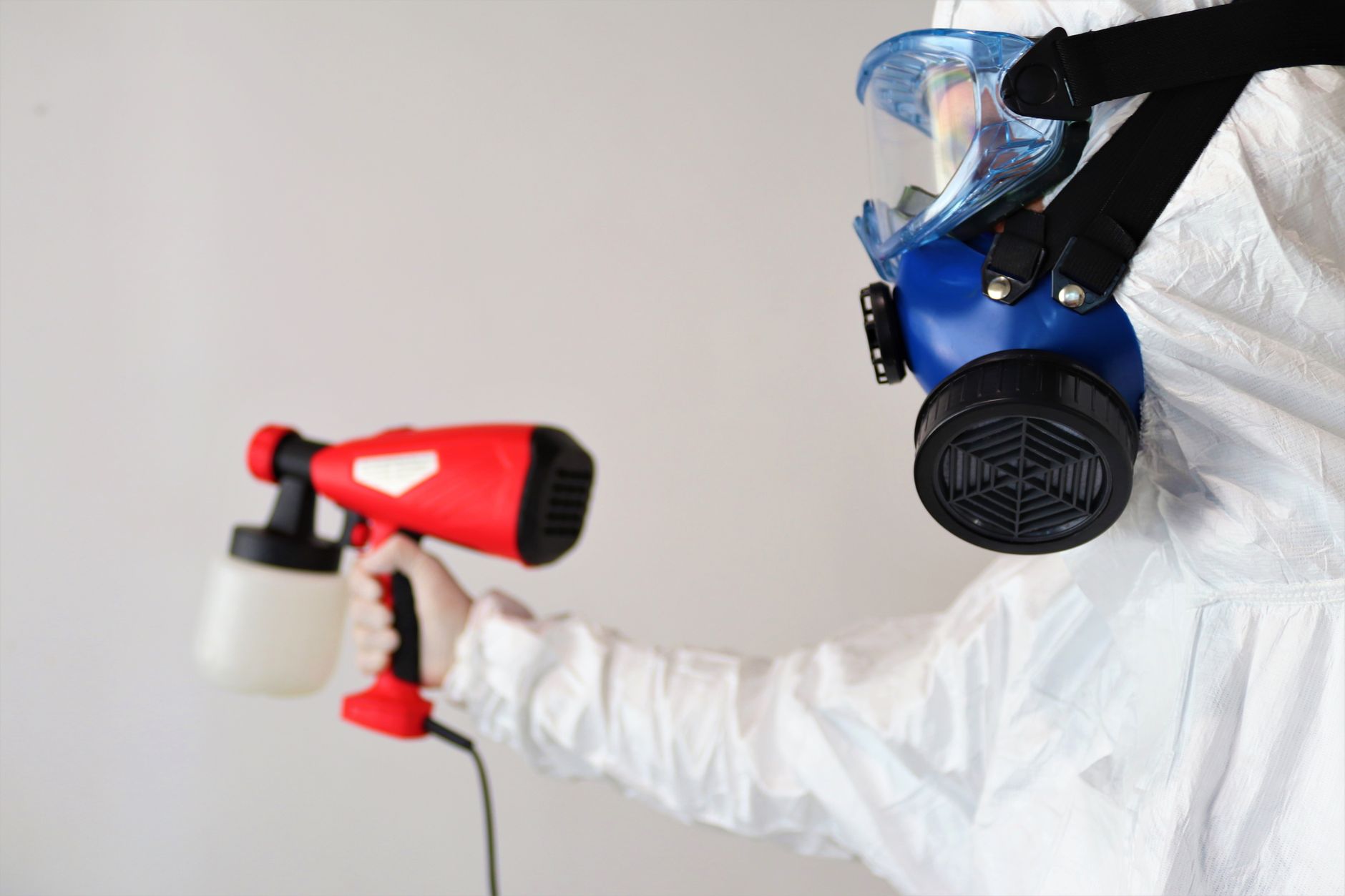
Before any of that, the water stops. Correcting the moisture source is part of what we do, not a referral you have to arrange yourself. In practice that has meant repairing a condensate drain that had backed up and overflowed the pan, replacing a rusted cooler pan and the float that let it keep filling, cutting out a failed section of galvanized or polybutylene supply line, opening a slab to reach a weeping copper line, flashing a room addition that had never been flashed correctly, or laying a new vapor barrier and sealing crawl space penetrations. Mold removed over an active leak grows back, and we are not interested in doing the work twice.
Where a home is built on a steel chassis with a sealed underbelly, the sequence shifts. That belly membrane holds water against the floor structure, so it has to be opened and drained, the insulation pulled where it is saturated, the subfloor dried and assessed from below, and the membrane properly resealed at the end. Working only from inside the room leaves wet material under the floor, and it will keep the smell alive no matter how clean the finished surface looks. If there is a roof-over that is ponding or split at a seam, that gets addressed too, because it is feeding the same problem.
Drying is measured, not assumed. We place dehumidifiers and air movers sized to the space and log moisture readings in the affected materials daily. In a hot dry stretch the interior of a wall can still be wet days after the surface feels fine, and in a closed-up house in winter drying stalls without mechanical help. We do not tear out containment until readings in the framing and subfloor come down to normal for the rest of the house.
We work to the industry standard for mold remediation, which in plain terms means: contain, keep air pressure working in your favor, remove what cannot be cleaned, clean and HEPA-vacuum what can, dry to verified readings, and confirm the result before rebuilding. Post-remediation verification — a visual check and, where appropriate, air sampling against an outdoor baseline — tells you the space is clean rather than just repainted.
You will know the scope and cost before we start, and you will get photos of what was behind the wall. If a policy covers the loss we bill your insurer directly and document to what an adjuster needs. Many of these calls come from an adult son or daughter helping a parent work through a problem, or from someone managing a property from another county. We are used to keeping two people informed at once, and we will put the same information in writing to both.
What We Do
- Containment and filtered air movement before any material is disturbed
- Moisture source repaired as part of the job — plumbing, condensate, cooler, roof or crawl space
- Underbelly opened, drained and resealed where the floor is built over a steel chassis
- Drying verified with logged meter readings, not by appearance
- Post-remediation verification and photo documentation
- Insurance billed directly when the policy covers the loss